NOTE: I accepted the 52 Ancestors in 52 Weeks challenge headed by fellow genealogy blogger Amy Johnson Crow. The idea behind this challenge is that you will receive email prompts, a word or phrase, every week, and you find something about your research or family history to write about. Click HERE to read my first 52 Ancestors blog post in 2019.
My family has been rooted in the south for centuries. My 3X great grandfather, Robert Hatchett, was brought to Arkansas as an enslaved man with his enslaver from Limestone County, Alabama in 1856. He was born around 1796 in Virginia. He lived nearly 70 years of his life under laws that treated him as property, not as a person – slavery in the United States of America.
Even after slavery ended my family still didn’t get to live the American dream that is often talked about. It was more like freedom-ish. Shortly after Reconstruction ended, Jim Crow laws and Black Codes took hold across the South, and Arkansas was no exception. These laws weren’t just social customs; they were legal barriers designed to strip away rights and opportunities for African American people.
The law dictated where Black people could go to school, ride a train, eat a meal, drink out of a water fountain, get medical care, and where to sit on a public bus. My grandmothers and parents attended segregated schools, not because they wanted to, but because it was the law.
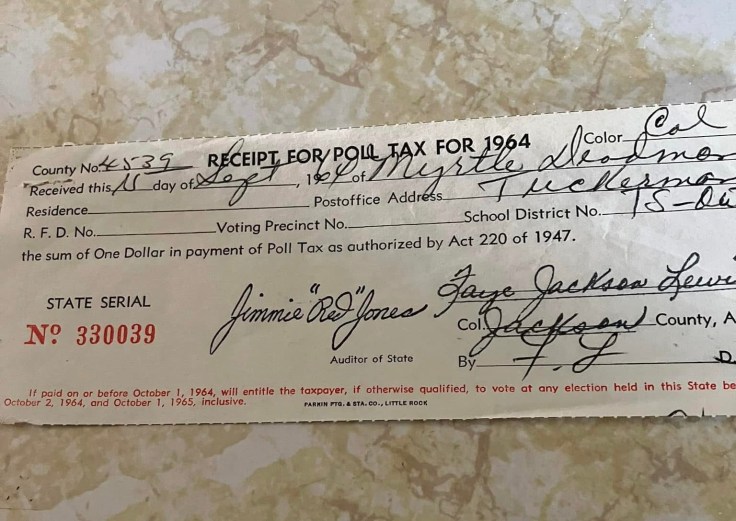
Voting was one of the most heavily restricted freedoms. In Arkansas and other southern states, African Americans were forced to pay poll taxes, fees just to register to vote, which many could not afford. Even if you had the money to pay a poll tax, you were also forced to take a literacy test, where you had to interpret a section of the US Constitution or answer trick questions. The passing or failing of this test was decided by the white registrar, not necessarily if all the answers were correct.
These laws weren’t just about race. It was about gender too. Black women like my grandmothers lived under laws that treated them as second-class citizens two times over. Even with college degrees and careers as teachers and community leaders, their voices were limited by both their Blackness and their womanhood. For years, they couldn’t vote, couldn’t own property, and had fewer legal protections in the workplace.
Although the laws of this country tried to make my ancestors feel small and unprotected, they raised their families and were leaders in their own way in their churches and communities. They educated themselves and their children and grandchildren. My family history journey is a testament to the survival, strength, and faith of my ancestors.
 Journey Through the Generations
Leave a comment