NOTE: I accepted the 52 Ancestors in 52 Weeks challenge headed by fellow genealogy blogger Amy Johnson Crow. The idea behind this challenge is that you will receive email prompts, a word or phrase, every week, and you find something about your research or family history to write about. Click HERE to read my first 52 Ancestors blog post in 2019.
In many families, the Bible is more than a holy book. It also serves as record keeper, storyteller, and a family heirloom. The family Bible is often received as a wedding gift or passed down from one generation to the next.
Inside the pages of a family Bible, you can sometimes find more than scriptures. You can find handwritten family history such as birth dates, marriage dates, and death dates. Sometimes you can find obituaries or funeral programs folded in some of the pages. I have also seen handwritten family recipes inside of family Bibles.

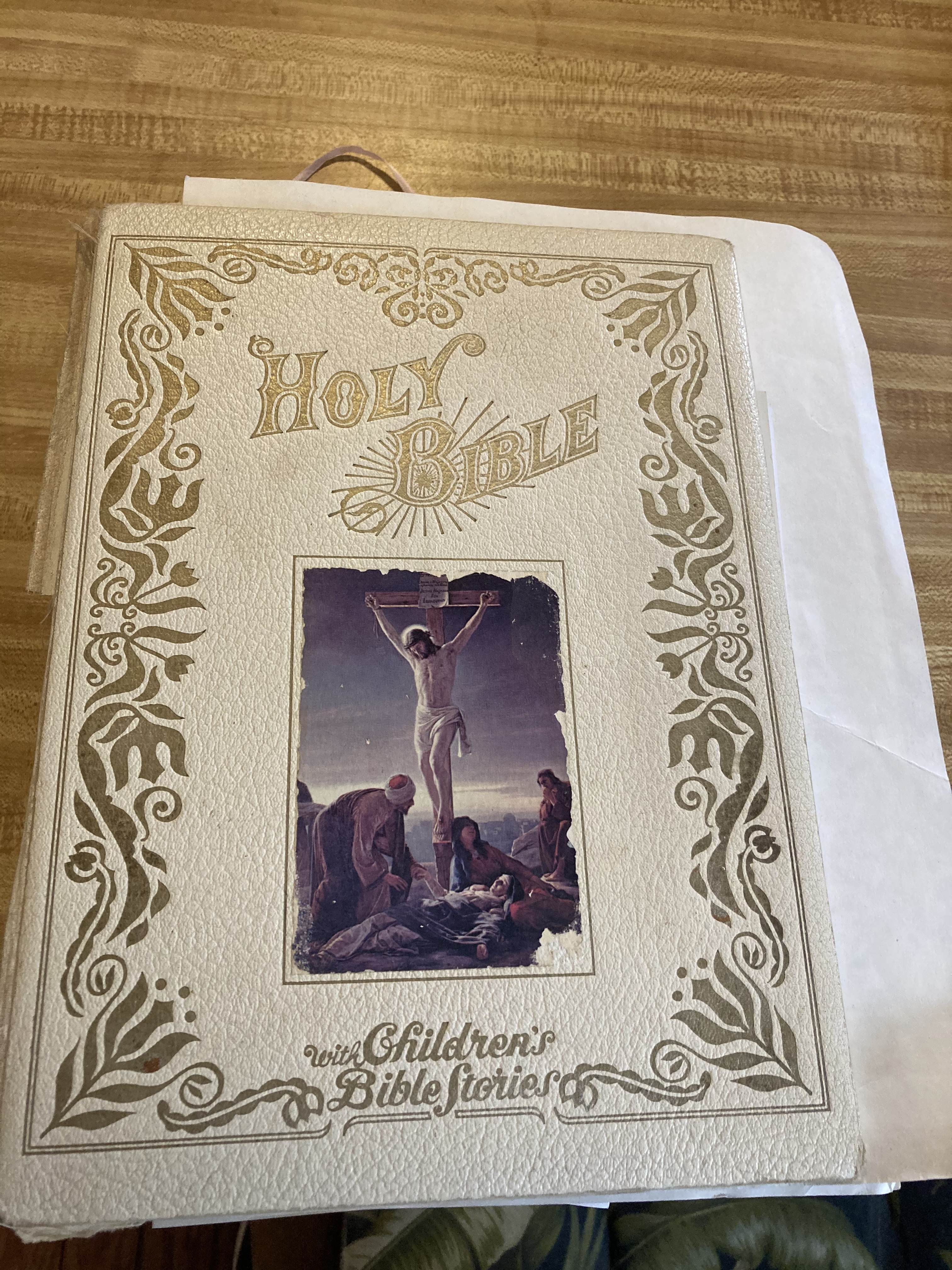

My husband’s family Bible
As a family historian, I now realize the importance of these Bibles to our family history research. Before vital records were kept by the government, many families documented life’s most important moments in their Bibles. These handwritten notes can be a missing puzzle piece that can connect generations and tell the stories of our ancestors. I remember seeing our family Bible at my Granny’s house when I was younger. But now no one seems to know what happened to it or where it is. I often think about what all she may have written in that Bible or if that Bible was handed down to her from her mother or grandmother.
I still hope to find our family Bible someday because in many ways the Bible doesn’t just hold the Word of God, but also the story of my family.
 Journey Through the Generations
Leave a comment